

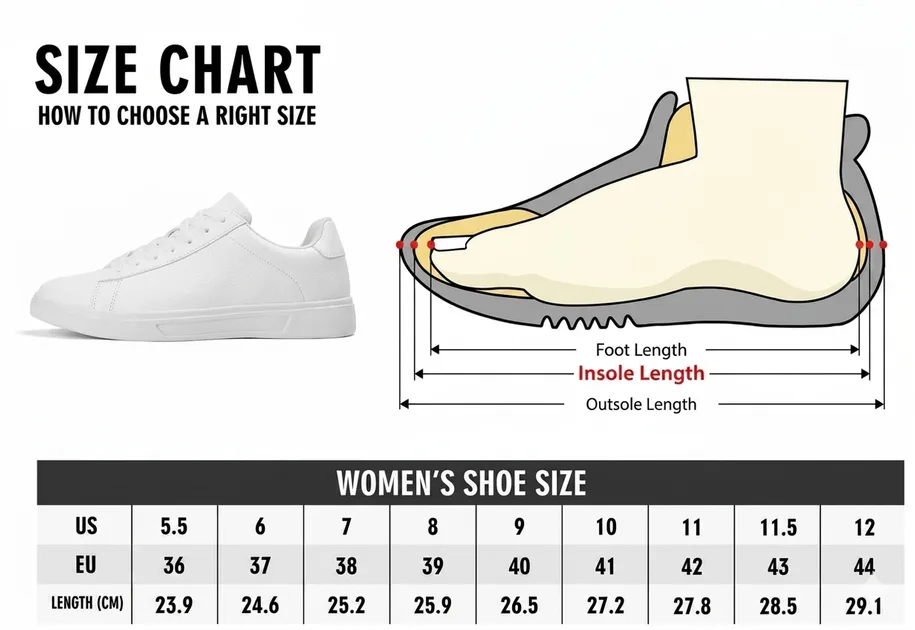
How to Find Your Perfect Sneaker Size: The Ultimate Sizing and Fit Guide
Getting the right sneaker size is much more complex than it seems. Unlike dress shoes, sneakers vary drastically in fit between brands—and even between different models from the same brand. This happens because each silhouette is built on its own manufacturing mold (last), which alters the width of the toe box (toebox), the height of the instep, and the ankle support.
1. Measure in Centimeters (CM) and Master International Conversions
The most common mistake is buying a pair online relying solely on your standard local size. Standard size tagging varies significantly from manufacturer to manufacturer, but your foot's measurement in centimeters never changes.
- The Paper Test: At the end of the afternoon or evening (when your feet are naturally more swollen from daily activity), stand flat on a sheet of paper.
- The Outline: Trace your foot while keeping the pen completely vertical. Do this for both feet, as most people have one foot that is slightly larger than the other. Always base your size choice on the larger measurement.
- The Conversion: Use a ruler to measure the distance from your heel to the tip of your longest toe. Add about 0.5 cm to 1 cm of clearance so the sneaker isn't suffocatingly tight. Use this final centimeter measurement to check the brand's official international size chart (US/UK/EU/CM).
The Pitfall of US Men's (M) vs. Women's (W) Sizing
Many highly anticipated sneaker drops release exclusively in women's sizing (Women's exclusive). If you need to convert US sizes across genders, use this practical list based on average centimeter equivalents:
- US 7.0 Men's: equivalent to US 8.5 Women's — approx. 25.0 cm
- US 8.0 Men's: equivalent to US 9.5 Women's — approx. 26.0 cm
- US 9.0 Men's: equivalent to US 10.5 Women's — approx. 27.0 cm
- US 10.0 Men's: equivalent to US 11.5 Women's — approx. 28.0 cm
📌 Rule of Thumb: For Nike and Jordan sneakers, the US Women's size is always 1.5 sizes larger than the equivalent US Men's size. If you wear a US 9 Men's, your size in a women's drop will be US 10.5. For Adidas, this difference is usually 1 full size (a US 9 M equals a US 10 W). When in doubt, ignore the M/W lettering and buy strictly based on the centimeters (CM).
2. Crucial Sizing Differences Between Mainstream Brands
Understanding how the major brands run will save you from the heartbreak of buying the wrong size during a limited drop:
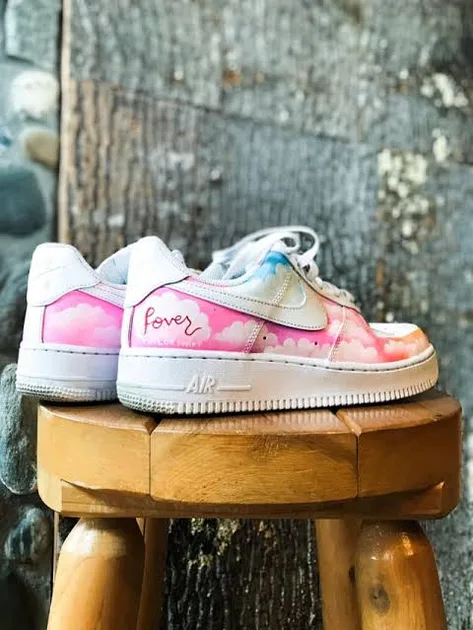
- Nike and Jordan: Most Nike basketball and running silhouettes run True to Size (TTS). However, the classic Air Force 1 features a notoriously large mold, prompting many buyers to go down half a size. Conversely, models like the Air Max 97 and Nike SB Dunk Low (due to the heavily padded tongue) feature a narrower toe box, making it highly recommended to go up half a size.
- Adidas: The German brand tends to feature a slightly wider mold on classic lifestyle models like the Stan Smith and Superstar. On the flip side, older silhouettes utilizing Yeezy technology (such as the Yeezy Boost 350 V2) strictly require you to go up half a size—or even a full size—due to the aggressive downward slope of the toe box.
- New Balance: Historically known for anatomical comfort, New Balance molds tend to be more generous and accommodating. Models from the premium Made in USA/UK lineages (like the 990 and 992) typically fit perfectly True to Size, making them the ideal choice for wide-footed sneakerheads.
3. Luxury Brand Alert: Watch Out for European (EU) Sizing
If you are transitioning from athletic sneakers to high-fashion designer sneakers, you need to triple-check your sizing. Luxury fashion houses like Balenciaga, Prada, Alexander McQueen, and Gucci utilize traditional European sizing (EU), which does not share a direct 1:1 conversion with the stylized "EU" size Nike prints on its tags.
The molds for these high-end brands are notoriously oversized:
- Balenciaga (Triple S, Track, Defender): These models typically run one to two full sizes large. The general consensus among sneakerheads is to size down at least one full size from your usual Nike EU size.
- Alexander McQueen (Oversized Sneaker): Follows the same pattern. Because it features a robust structure and very rigid leather at the toe box, the mold leaves plenty of empty room. Going one full size down is standard practice.
- Prada (Cloudbust Thunder, America's Cup): They often use proprietary charts (frequently defaulting to UK sizing or ultra-wide Italian molds). Always try them on in-store or request exact insole measurements in centimeters before dropping hundreds of dollars online.
4. The Impact of Socks, Insoles, and the "Break-In" Period
The perfect fit doesn't just depend on the raw shoe; it depends on how you plan to style and wear it:
- Sock Thickness: Wearing thick performance socks or heavy crew socks with high-tops (like a Jordan 1 High) reduces internal volume and might require an extra half size up.
- Stretching vs. Rigid Materials: Premium leather and natural suede uppers will stretch and mold to your foot shape after a few weeks of wear (the break-in period). However, rigid synthetic uppers, plastic cages (like the details on the Nike TN Air Max Plus), or structured mesh weaves will maintain their factory-tight fit forever.
- Using Extra Accessories: If you routinely use orthopedic insoles or crease protectors inside the toe box to keep your leather from wrinkling, you must go half a size up from your baseline standard.
Checkout Checklist
- Forget your static local size number: Always convert your foot length into centimeters (CM) and cross-reference it with that specific model's chart.
- Check the gender of the drop: Verify if the sneaker is a Women's exclusive (WMNS) so you can apply the 1 to 1.5 size upgrade if you usually buy Men's sizing.
- Luxury demands attention: If you are buying European luxury labels, be prepared to size down relative to your casual sportswear size.
- Account for accessories: Remember to calculate the internal space that will be taken up by thick socks or crease shields.
- Verify the return policy: When buying online—especially through secondary resell platforms—make sure the marketplace allows for returns or size swaps if the fit isn't immaculate.
Securing the correct size on your first try saves you from steep return shipping fees, painful blisters, and, above all, keeps a rare pair from sitting deadstock in your closet just because it doesn't fit.


Comments
Loading comments…
Log in to leave a comment